Yikai WangI am a Ph.D. Candidate at Carnegie Mellon University, advised by Prof.Ding Zhao. My current research interests center on adaptive, general-purpose humanoid loco-manipulation. I spent a wonderful summer as a research intern at Bosch AI in 2025. I received my bachelor's degree from Tsinghua University. During my undergraduate studies, I was a research assistant at the ISR Lab, IIIS, Tsinghua University, where I worked with Prof.Jianyu Chen. I was also a student intern at Carnegie Mellon University, where I worked with Prof. Guanya Shi.
|
|
Research |
|
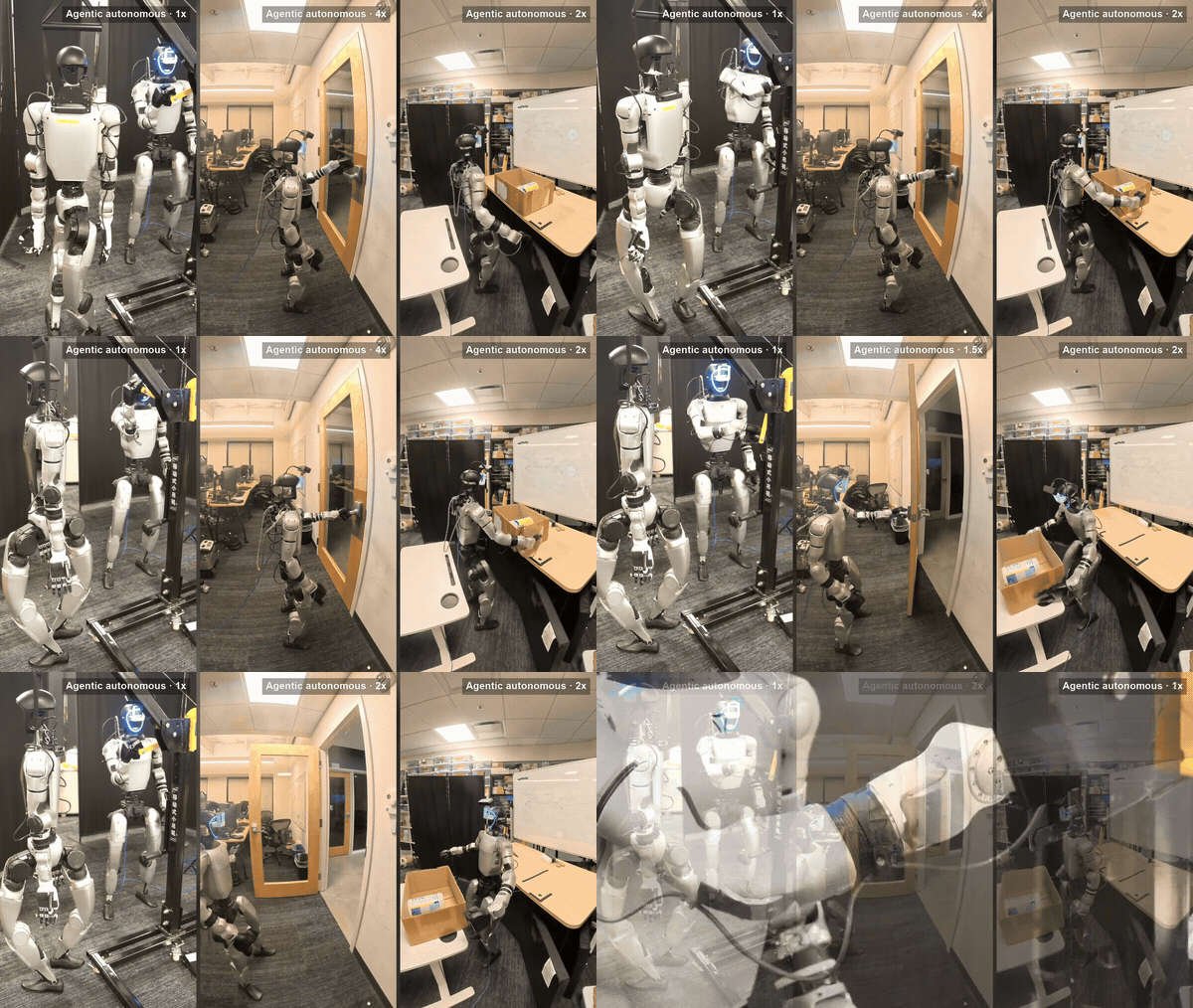
KPI: A Promptable Kernel for Physical Interaction on HumanoidsYikai Wang, Honghao Zhu, Xiao Hu, Hao Zhang, Zelin Wang, Yip Fun Yeung, Ding Zhao, Lingfeng Sun Preprint, 2026 paper / website / KPI is a general real-time interaction kernel. Placing it on top of a humanoid whole-body tracker unlocks diverse contact-rich loco-manipulation while preserving the tracker’s general-purpose tracking capabilities. Paired with a powerful agent such as GPT-6 Astra, the resulting system turns high-level instructions into physical interaction. |
|
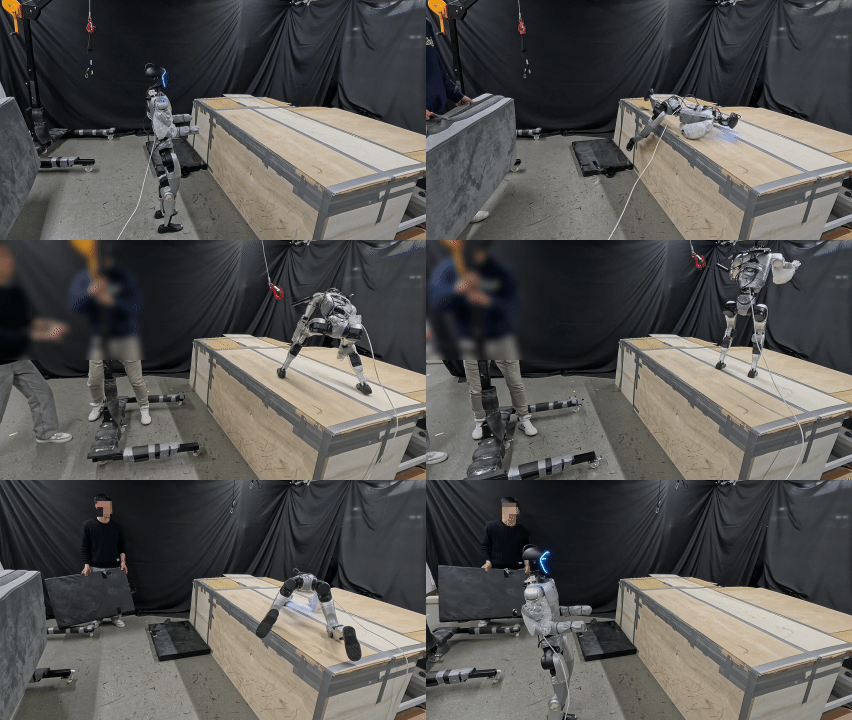
APEX: Learning Adaptive High-Platform Traversal for Humanoid RobotsYikai Wang*, Tingxuan Leng*, Changyi Lin*, Shiqi Liu, Shir Simon, Bingqing Chen, Jonathan Francis, Ding Zhao IROS 2026 arxiv / video / website / APEX enables adaptive humanoid traversal of high platforms via contact-rich climbing and a unified multi-skill policy. Leveraging a ratchet progress reward and LiDAR-based perception, the system adapts its behaviors to terrain geometry and approach conditions, achieving zero-shot sim-to-real traversal of 0.8 m (114% of leg length) platforms on a 29-DoF humanoid. |
|
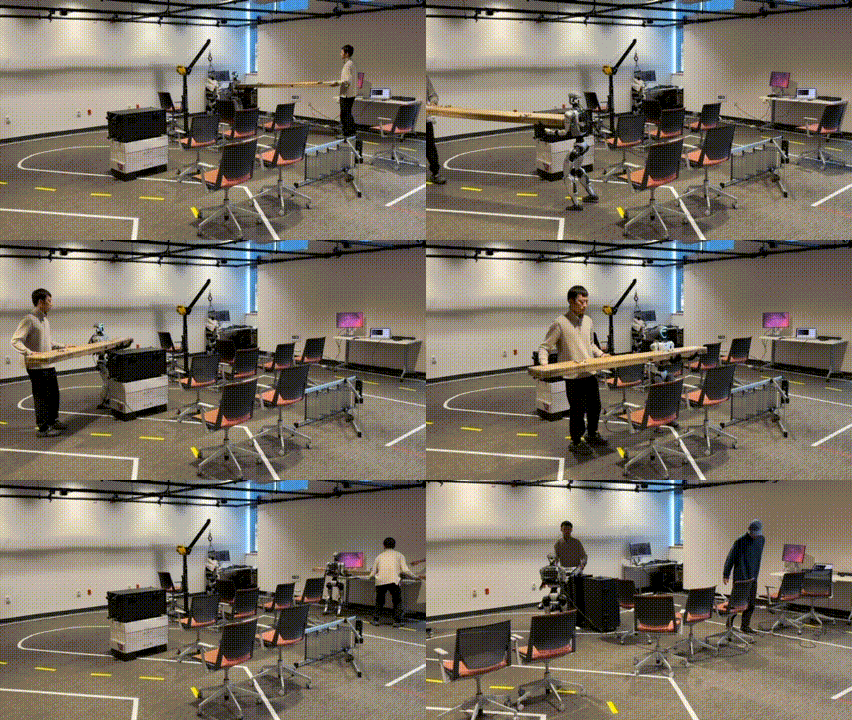
Learning Human-Robot Collaboration via Heterogeneous-Agent Lyapunov Policy OptimizationHao Zhang, Yaru Niu, Yikai Wang, Ding Zhao, H. Eric Tseng ICML 2026 Oral Presentation (top 0.7%) arxiv / website / Heterogeneous-agent Lyapunov policy optimization (HALyPO) establishes formal stability directly in the policy-parameter space by enforcing a per-step Lyapunov decrease condition on a parameter-space disagreement metric. |
|
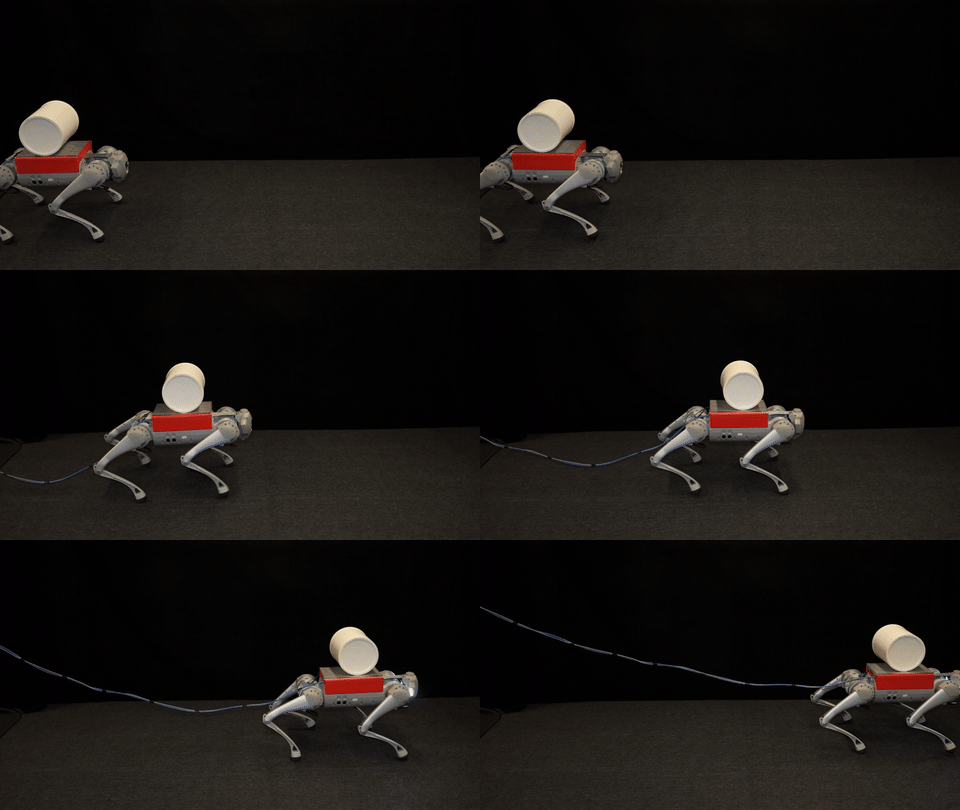
LocoTouch: Learning Dynamic Quadrupedal Transport with Tactile SensingChangyi Lin, Yuxin Ray Song, Boda Huo, Mingyang Yu, Yikai Wang, Shiqi Liu, CoRL 2025 arxiv / video / code / website / Equipped with a high-density distributed tactile sensor, our quadrupedal robot can transport everyday objects without mounting or strapping. The transport policy achieves zero-shot sim-to-real transfer, featuring two task-agnostic components: high-fidelity tactile simulation and robust, symmetric, frequency-adaptive gaits. |
|
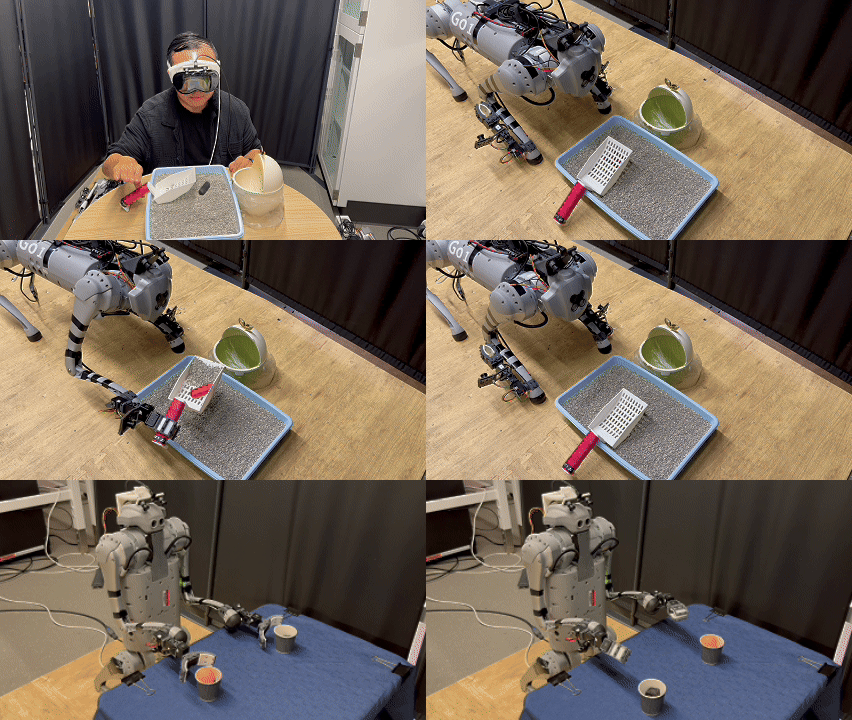
Human2LocoMan: Learning Versatile Quadrupedal Manipulation with Human PretrainingYaru Niu*, Yunzhe Zhang*, Mingyang Yu, Changyi Lin, Chenhao Li, Yikai Wang, Yuxiang Yang, Wenhao Yu, Tingnan Zhang, Zhenzhen Li, Jonathan Francis, Bingqing Chen, Jie Tan, Ding Zhao RSS 2025 arxiv / video / code / website / Human2LocoMan is a unified framework for collecting human demonstrations and teleoperated robot whole-body motions, along with cross-embodiment policy learning for versatile quadrupedal manipulation. |
|
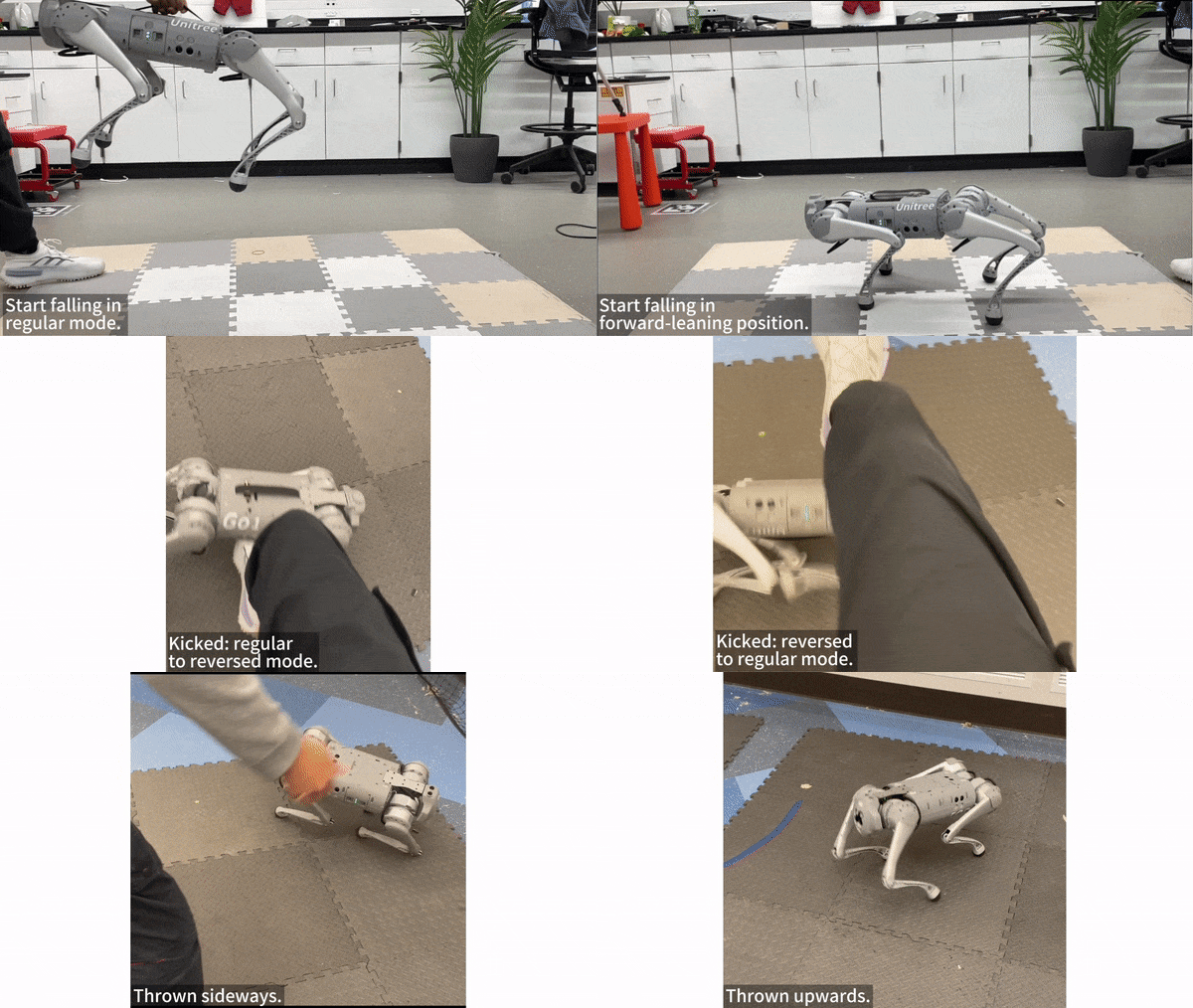
Guardians as You Fall: Active Mode Transition for Safe FallingYikai Wang, Mengdi Xu, Guanya Shi, Ding Zhao IEEE International Automated Vehicle Validation Conference (IAVVC), 2024 Best Paper Award – Innovation arxiv / video / code / website / We propose Guardians as You Fall (GYF), a safe falling/tumbling and recovery framework that can actively tumble and recover to stable modes to reduce damage in highly dynamic scenarios. The key idea of GYF is to adaptively traverse across different stable modes via active tumbling, before the robot shifts to irrecoverable poses. GYF offers a new perspective on safe falling and recovery in locomotion tasks, which potentially enables much more aggressive explorations of existing agile locomotion skills. |
|
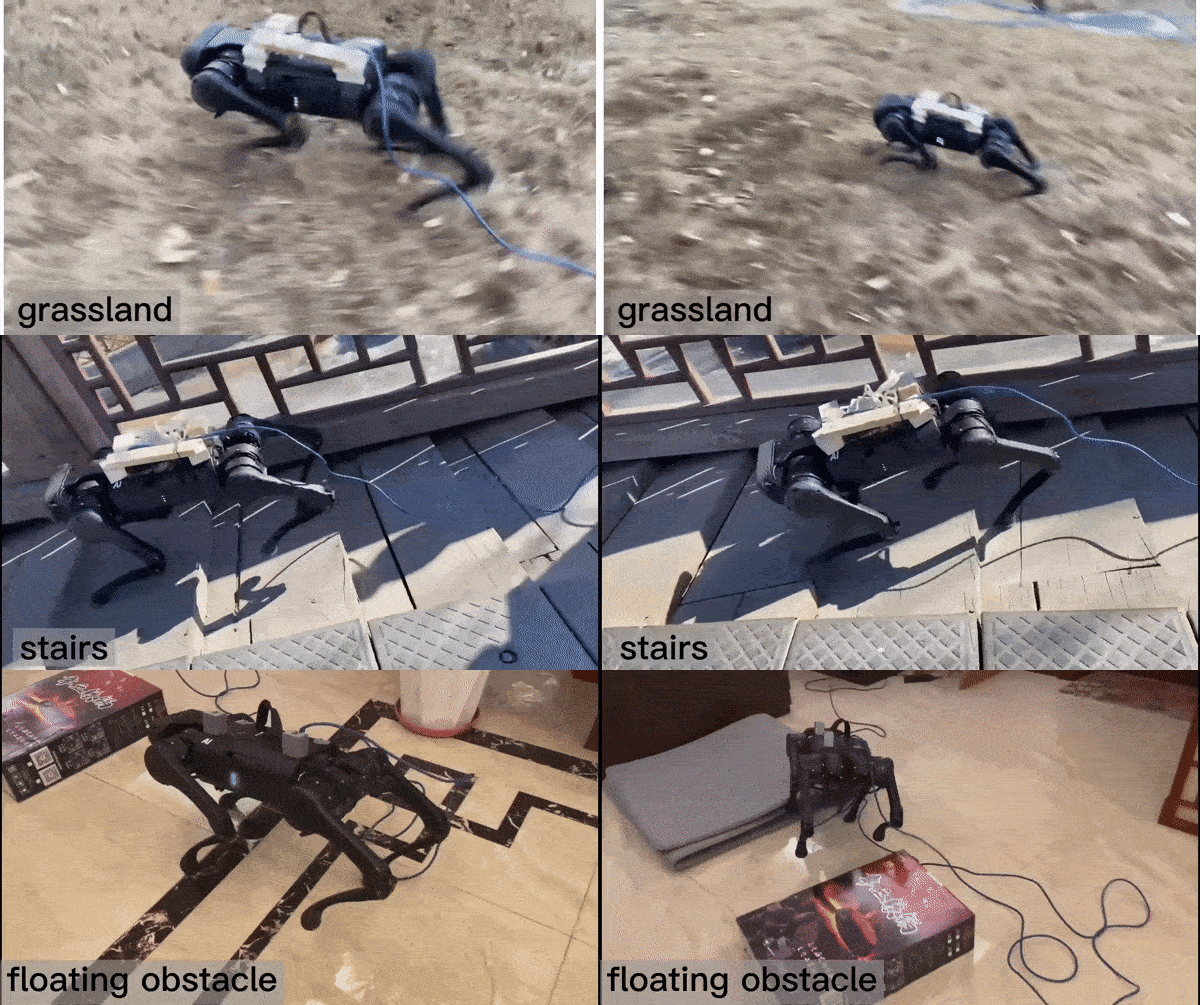
Learning Robust, Agile, Natural Legged Locomotion Skills in the WildYikai Wang*, Zheyuan Jiang*, Jianyu Chen CoRL 2023 Workshop on Robot Learning in Athletics arxiv / video / website / We propose a new framework for learning robust, agile and natural legged locomotion skills over challenging terrain with only proprioceptive perception. We incorporate an adversarial training branch based on real animal locomotion data upon a teacher-student training pipeline for robust sim-to-real transfer. To the best of our understanding, this is the first learning-based method enabling quadrupedal robots to gallop in the wild. |
Projects |
|
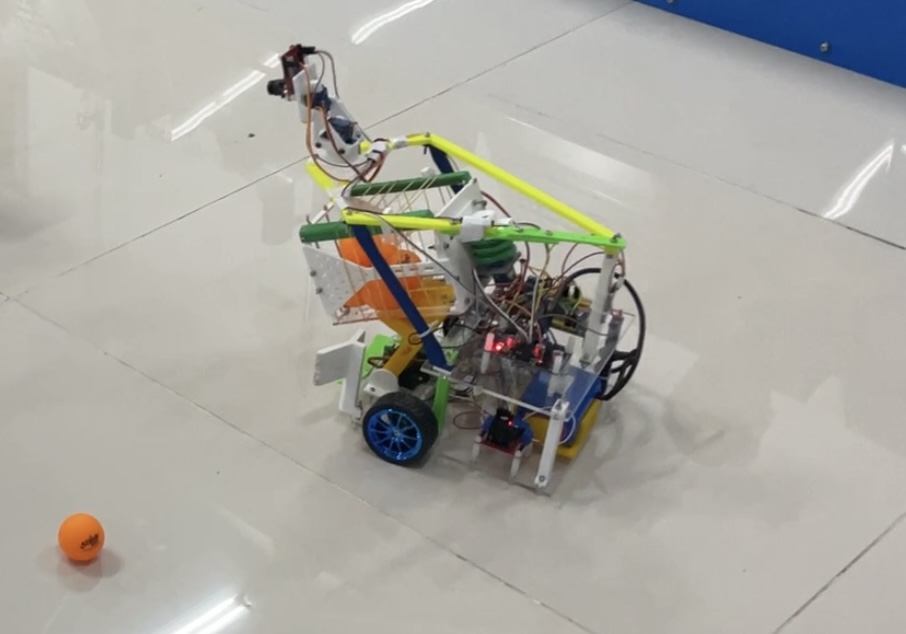
Building an autonomous picking car from scratchproject 2022-09-03 video / Design and built a car that is capable of autonomous navigation, picking and storing certain yellow objects and unloading them in the designated area. Target recognition was accomplished by a monocular camera and image algorithms. Picking and unloading were accomplished with 3 parallel elastic ropes and a steering engine. Velocities were adjusted using PID control. Mechanical parts were designed using Solidworks, and manufactured by 3D-printing/laser cutting. |
|
Design and source code from Jon Barron's website |